
Hells Canyon Update - FERC Relicensing
On January 14th, the Federal Energy Regulatory Commission (FERC) abruptly announced and published a Supplemental Draft Environmental Impact Statement (SDEIS) for the relicensing of the Hells Canyon Complex. As we’re sure many of you are well aware, the Hells Canyon Complex is the nation’s largest privately owned hydroelectric project in the United States and requires a license from FERC to operate. These operational licenses are typically issued for 30-50 years and clearly define project boundaries, authorized capacity, environmental mitigation measures, dam safety requirements, and operational conditions. The initial license granted for the Hells Canyon Complex expired more than 20 years ago in July 2005.
Idaho Power, the owner and operator of the Hells Canyon Complex, has been working with FERC and relevant agencies and stakeholders to acquire a new license since 2005. As one can imagine, this is a complex process involving numerous permits that has resulted in various settlements and mandatory conditions for operations and the major delays in the issuance of a new license.
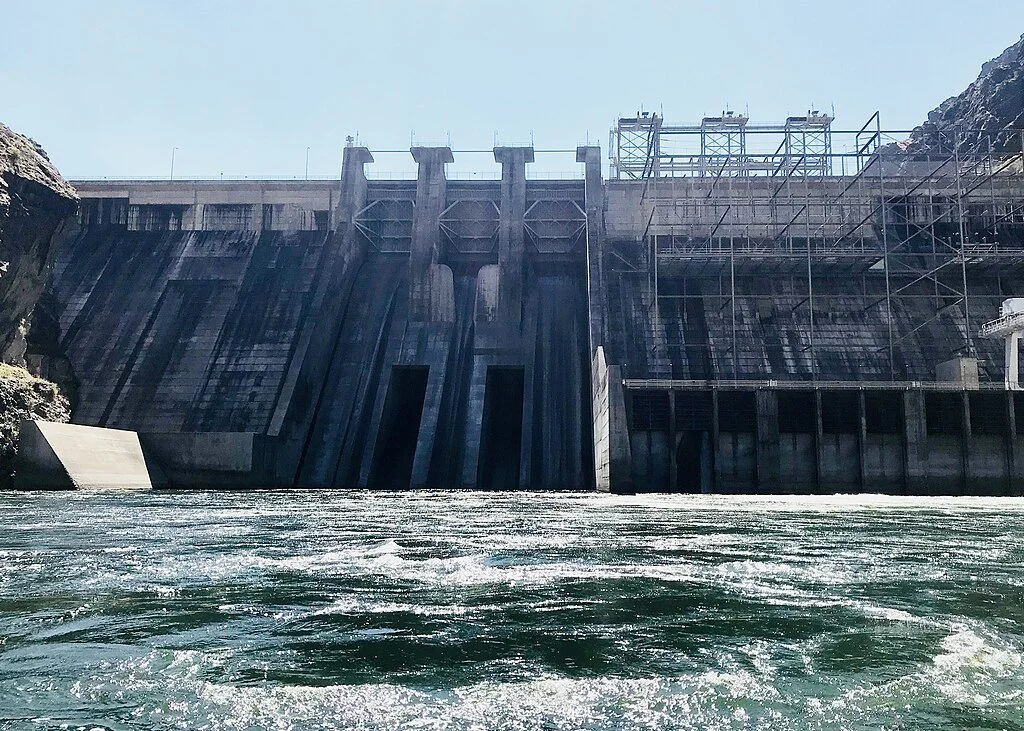
Hells Canyon Dam, photo: Flytzjl93, CC BY-SA 4.0, via Wikimedia Commons

The original FERC license for the complex was issued in 1955, well before the creation of the Clean Water Act and other relevant laws aimed at mitigation and environmental protection. Since then, there has been a more comprehensive understanding of the impacts that this hydroelectric complex has on the Snake River and its resources.
Some of these impacts are more obvious than others. For one, these dams have completely blocked anadromous salmon and steelhead, lamprey, and the movements of other native fish like sturgeon to habitat upstream. Historically, approximately 1 to 1.7 million salmon and steelhead annually migrated through the area now blocked by these dams. Their construction compounded already existing impacts associated with other dams and diversions in the basin. Salmon and steelhead once filled tributary rivers such as the Owyhee, Boise, Payette, and Bruneau. The Marsing reach of the mainstem Snake River, downstream of Swan Falls dam, was the last unblocked segment of a premier Fall Chinook spawning ground before the Hells Canyon Complex was constructed. The extirpation of these upstream populations, elimination of sport and Tribal fisheries, and profound ecological and cultural loss has never been mitigated for.
Others impacts are more insidious. For one, the Hells Canyon Complex creates the conditions to produce and release through the food chain massive amounts of organic methylmercury. Mercury naturally makes its way into aquatic ecosystems through the hydrologic cycle. Through low-exygen conditions found in deep, cold-water reservoirs like Brownlee, natural processes occur that produce these vast amounts of toxic methylmercury. Here, in the very cold and oxygen starved bottom hypoxic zones, some bacteria thrive that convert decomposing organic matter into organic methylmercury. When reservoir stratification breaks down, the stratified layers of water mix and the methylmercury is rapidly incorporated into the food chain. As far back as 2004, the Idaho and Oregon Departments of Environmental Quality have stated that fish tissue samples for methylmercury regularly exceed levels of concern by 52% and 80% respectively.
These are just two examples we are addressing along with many other issues associated with any future operational license that will be included in our comments to FERC. While we have serious concerns about the operation of the Hells Canyon Complex and its impacts to Idaho’s rivers and fisheries, we will continue to hold FERC and Idaho Power accountable throughout this entire process and ensure that you are informed along the way. The deadline for comments is March 2nd, 2026.